A história de Copacabana, Rio de Janeiro, Brasil
Copacabana é o bairro mais conhecido do Rio de Janeiro, do Brasil, do mundo!
Avenida Nossa Senhora de Copacabana
Aqui você vai conhecer um pouco da história sobre como em menos de um século um areal inóspito como Copacabana se tornou o ponto turístico mais conhecido do planeta!


#Hashtag: #copacabana #historiadecopacabana
Copacabana é o bairro mais conhecido
do Rio de Janeiro,
do Brasil,
do mundo!
“Depois que voltei, juntei-me a um alegre grupo num passeio a cavalo a Copacabana, pequena fortaleza que defende uma das pequenas baías atrás da Praia Vermelha e de onde se podem ver algumas das mais belas vistas daqui. As matas da vizinhança são belíssimas e produzem grande quantidade de excelente fruta chamada cambucá, e nos morros o gambá e o tatu encontram-se frequentemente (...)”
“O primeiro plano, formado pelo prolongamento das montanhas que beiram a costa do Rio de Janeiro, permite verem-se as pequenas ilhas e bancos de areia que assinalam a sua proximidade. Vê-se no meio da areia a pequena igreja de Copacabana, isolada num pequeno platô: à direita um segundo plano formado por um grupo de montanhas entrando mar a dentro esconde a sinuosidade do banco de areia cuja extremidade aparece com a sua parte cultivada tão reputada pelos seus deliciosos abacaxis. Aí se forma a embocadura de um pequeno lago alimentado pelas águas do mar em maré alta.”
Vista de Copacabana do alto da ladeira do Leme
A primeira lenda que se conhece sobre Copacabana o bairro, que já tinha este nome, conta que duas baleias, encalhadas segundo alguns, livres segundo outros, teriam aparecido na praia, no final de agosto de 1858. Entre os dias 22 e 23 daquele ano, centenas de pessoas - com o imperador Pedro II e sua comitiva à frente - deslocaram-se para vê-las.
Os mais ricos seguiam de coches, puxados a cavalo, e levavam um grande farnel barracas para se acomodarem. Outros iam a cavalo, ou mesmo a pé. As baleias não estavam mais lá, apesar disso, quem ficou na praia divertiu-se muito, num piquenique que durou três dias e três noites.
Começou daí o namoro da população do Rio de Janeiro com aquele areal inóspito e insalubre, que em meados do século XVIII, trocara o nome de Sacopenapã (toda a região de Copacabana até a Lagoa Rodrigo de Freitas), em tupi o caminho das socós (ave pernalta, da família dos ardeídeos, muito abundante nas restingas do Rio de Janeiro), por Copacabana , mirante do azul, em quichua (nativos do Peru e da Bolívia) e, também, vem do termo aymara arcaico Copakawana e significa aquele que atira a pedra preciosa.
A capela para Nossa Senhora de Copacabana no final do século XIX
Na península de Copacabana, ao Sul do lago Titicaca, entre os países do Peru e da Bolívia existe uma capela onde está uma imagem da Virgem Maria, supostamente milagrosa. Uma réplica dessa imagem foi mandada para o Rio de Janeiro que construiu uma capela, no local onde hoje é o Posto Seis, e foi dedicada a Nossa Senhora de Copacabana , surgindo o nome do bairro.
Entretanto, a região só foi incorporada à cidade em 6 de julho de 1892, com a inauguração provisória do Túnel de Real Grandeza, atual Túnel Velho , cujo nome correto é Túnel Alaor Prata . Nessa ocasião, com a presença do presidente, em exercício, Marechal Floriano Peixoto, foi lavrada uma ata que marcou, oficialmente, o nascimento do bairro de Copacabana.
Esse grande melhoramento permitiu que fosse estendida uma linha de bondes, a princípio de tração animal, até a Praça Serzedelo Correia . Posteriormente, estenderam-se ramais até o Leme e o fim da Rua Nossa Senhora de Copacabana.
O encontro dos dois lados do Túnel Velho em 1892
Outro túnel, conhecido como Túnel Novo, só foi construído em 1904 e um segundo ao seu lado bem mais tarde, ambos cortam o Morro da Babilônia.
Desde os primeiros anos do século XVIII, muitas terras de Copacabana eram desmembradas em chácaras de variadas dimensões. Em 1779 Copacabana é integrada no sistema defensivo da cidade, para evitar a entrada de piratas, com a edificação de fortificações no Reduto do Leme do Forte do Vigia, no morro da Babilônia e o Reduto de Copa-Cabana, junto a Ponta da Igrejinha. Já existiam as baterias do Inhangá do Reduto do Leme.
A pintora e escritora inglesa Maria Graham, em 1824, publicou o primeiro livro que mencionava Copacabana .
Em seu livro Diário de uma viagem ao Brasil, a autora faz este relato:
“Depois que voltei, juntei-me a um alegre grupo num passeio a cavalo a Copacabana , pequena fortaleza que defende uma das baías atrás da Praia Vermelha e de onde se pode ver algumas das mais belas vistas daqui.
As matas das vizinhanças são belíssimas e produzem grande quantidade de excelente fruta chamada cambucá, e nos morros o gambá e o tatu encontram-se freqüentemente.”
Jean Baptiste Debret, que veio ao Brasil como membro da Missão Artística Francesa, descreve, em 1834, em sua obra Viagem Pitoresca e Histórica ao Brasil:
“Vê-se no meio da areia a pequena igreja de Copacabana, isolada num pequeno platô, mais a direita um segundo plano, formado por um grupo de montanhas, entrando pelo mar e esconde a sinuosidade do banco de areia, cuja extremidade reaparece com sua parte cultivada, tão reputada pelos seus deliciosos abacaxis.”
Quando Copacabana não passava de um imenso areal, havia somente um acesso por mar, até alcançar a praia com vários alagadiços onde estariam antigas tabas de índios tamoios.
Em 1855, nascia a ladeira do Barroso, atual Tabajaras e seu prolongamento a Rua Siqueira Campos.
José Martins Barroso, proprietário de terras em Copacabana , mandou construir uma estrada de meia rodagem, onde pudessem transitar carruagens e cavaleiros em direção à praia, ligação que começava na Rua Real Grandeza, subindo a grota entre os morros de São João e da Saudade.
Estava assim criada a segunda passagem que levava à Copacabana.
Alto da Ladeira dos Tabajaras em 1938
Depois de muitas concessões que não deram em nada, a 16 de agosto de 1872, o Decreto 5.058 concedeu ao Barão de Mauá o privilégio, por 20 anos, para lançar cabos submarinos e explorar a telegrafia elétrica entre o Brasil e a Europa através da Brazilian Submarine Telegraph Company.
Finalmente, a 22 de junho de 1874, o Brasil era ligado à Europa pelo cabo submarino.
Nesse dia, por seus serviços prestados, o Barão de Mauá foi elevado a Visconde.
Copacabana Posto 6 ¨em 1895
Copacabana (Posto 6) em 1895. Vemos a recém-aberta rua Francisco Otaviano, morro Dois Irmãos e Lagoa. A casa à direita, na esquina da Francisco Otaviano , era o famoso rende-vouz de Mère Louise. No pequeno casebre em frente ficava o telégrafo a cabo que ligava o Brasil à Europa, inaugurado em 1874.
Os trabalhos começaram num terreno desmembrado da Fazenda de Copacabana , na praia das Pescarias, atual Posto Seis. Entre cajueiros e pitangueiras foram construídas duas casas, uma por onde passava o cabo submarino e a outra, ao lado, para os funcionários, era a casa dos ingleses. De Copacabana , em junho de 1874, o Brasil passa a ser ligado à Europa por esse cabo submarino.
Alguns anos depois, o Dr. José de Figueiredo Magalhães inicia um serviço de diligências para Copacabana , saindo da Rua São Clemente para a Rua Real Grandeza, em Botafogo, subia a ladeira do Barroso , hoje dos Tabajaras , até Copacabana . Já havia uma casa de saúde, com hotel anexo, em 1878, que o Dr. Figueiredo Magalhães mandara construir para atender seus pacientes.
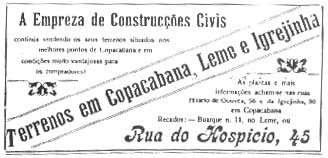
Na década de 90, do século XIX, formou-se a Empresa de Construções Civis para lotear Copacabana . Essa empresa foi criada por Alexandre Wagner, seus genros Otto Simon e Theodoro Duvivier, junto com Paula Freitas e Torquato Tapajós. Em 1891, a empresa comprou as propriedades de Alexandre Wagner que iam das proximidades da ladeira do Barroso até o Leme, para abertura de ruas e construções de casas.
A história de Copacabana começa com a inauguração do Túnel de Copacabana, a 6 de julho de 1892 (hoje Túnel Alaor Prata, mais conhecido como Túnel Velho), construído pelo engenheiro Coelho Cintra, gerente da Companhia Ferro-Carril Jardim Botânico.
Por muito tempo Copacabana foi habitada apenas por humildes pescadores que viviam em palhoças.
Muitos homens e companhias de empreendimentos anteviam as possibilidades do bairro e apostavam nelas lançando loteamentos.
Foi o progressivo entrelaçar desses loteamentos que deu o aspecto geometricamente ordenado às suas ruas.
Um homem em particular, o doutor Figueiredo Magalhães, acreditava muito no futuro de Copacabana .
Morador de uma chácara no bairro, desde o começo da década de 80, do século XIX, passou a apregoar os benefícios terapêuticos dos bons ares e mares da tranquila Copacabana a seus pacientes.
Para motivar ainda mais o público, as companhias interessadas, como a do Jardim Botânico, alardeavam as qualidades do bairro, mas alguns acionistas da empresa achavam temerário fazer circular bondes sobre terreno arenoso. Seus diretores, porém, argumentaram que "as duas praias de Copacabana e Arpoador são dotadas de um clima esplêndido e salubre, beijadas constantemente pelas frescas brisas do oceano, constituindo dois verdadeiros sanatórios e que como parte de uma cidade periodicamente dizimada por epidemias, rapidamente seriam procuradas pela população como nas cidades balneárias da Europa".
Os primeiros anos do século XX foram de grande progresso para o bairro de Copacabana , quando foram instalados os primeiros bondes movidos a eletricidade para o ramal do Túnel de Copacabana até a estação Malvino Reis (atual Praça Serzedelo Correia). É construído um grande restaurante-balneário, no final da praia do Leme e criado o Grupo Carnavalesco o Prazer do Leme.
Bar da Brahma - Leme 1908 - Foto de Augusto Malta
Em 1906, 4 de março, é inaugurado o Túnel do Leme (atual Engenheiro Coelho Cintra) que ligava Botafogo à Rua Salvador Correia (hoje Avenida Princesa Isabel), com bondes de tração elétrica até a praça do Vigia (atual Praça Júlio de Noronha).
Nesse mesmo ano, o prefeito Pereira Passos inicia as obras de construção da Avenida Atlântica, que até então não passava de fundo de quintal das casas da Avenida Nossa Senhora de Copacabana.
A pedreira de Inhangá é arrasada e as calçadas são revestidas de mosaicos pretos e brancos, com desenhos em ondas, trazidos de Portugal.

Inhangá no início anos 1900
"Copacabana! Grandioso painel! Suntuosa tela em que o pincel da natureza, sonhador e evocativo, deixou as mais perfeitas linhas, as mais encantadoras nuances, as mais festivas tonalidades!
Eden terreno! Recanto paradisíaco!
Quando o espírito cansado da labuta diária, necessita de uma distração que o repouse, tem como consolo balsâmico, as virações destas praias, ode, além da harmônica beleza, reina a serenidade contemplativa, interrompida apenas pelo rumorejar constante e monótono do mar glauco e majestoso.
Demais, tudo aqui convida ao amor, ao discretear idílico, a todas essas expansões da alma de que às vezes a gente necessita tanto e que são os melhores bocados da nossa existência"
Publicado no jornal O Copacabana em 19 de Julho de 1907
Com as facilidades de acesso ao novo bairro torna-se moda ir à Missa do Galo, na Igrejinha de Copacabana.
Uma grande novidade: é inaugurado o primeiro cinema do bairro, na Praça Serzedelo Correia.
Nessa época, os habitantes das cerca de 600 casas do bairro podiam divertir-se na Cervejaria Brahma, no final do ramal do bonde do Leme, e no Cabaré Mère Louise, próximo à Igrejinha, que funcionava dia e noite e lembrava um cabaré de far west.
É criada a paróquia de Nossa Senhora de Copacabana e Santa Rosa de Lima. No promontório da Igrejinha é colocada a pedra fundamental para a construção de uma fortaleza, atual Forte de Copacabana.

Avenida Atlântica em 1906
Em 1910, dezoito anos após sua existência como bairro, Copacabana tinha 20.000 moradores que enviaram um abaixo-assinado à Prefeitura reivindicando a instalação de escolas, sanatório e praça para recreação infantil.
Nessa época beber leite em estábulos era um hábito sofisticado entre os amigos moradores cultuadores da boa saúde.
O Estábulo Mimoso Internacional, onde se podia beber o copo ao pé da vaca ou fazer encomendas, pertencia ao português José Marques e funcionava em 2 endereços: na Avenida Nossa Senhora de Copacabana e na Rua Santa Clara, 52

A aviação estava em franco desenvolvimento e a praia de Copacabana era considerada um excelente campo de pouso, não só pela sua extensão de areia, como pelas ótimas condições de visibilidade para os pilotos dos aviões, que decolando da praia, iam fazer piruetas nos céus do Centro da cidade.
Com a presença do presidente da República, marechal Hermes da Fonseca, em 1914, junto à Igrejinha é inaugurado o Forte de Copacabana. No ano anterior, eram iniciadas as obras de construção do Forte do Leme (hoje Forte Duque de Caxias) no início da praia do Leme, no Morro do Vigia do Leme.
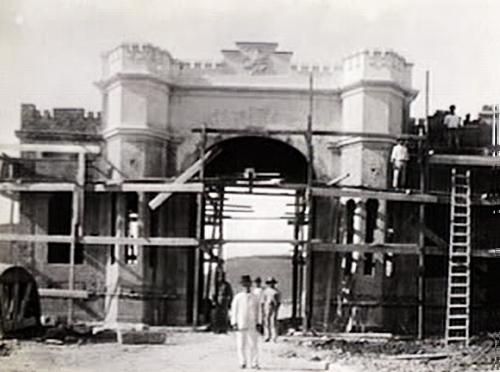
As obras de construção do Forte de Copacabana
Somente em 1915 foi assinado pelo prefeito Rivadávia da Cunha, o decreto determinando a separação de Copacabana do distrito da Gávea, apesar de sua criação em 1892.
Outro decreto de outubro de 1917 reconhece a denominação de Praia de Copacabana, nos seus mais de 4km de extensão, que tinha 45 ruas, 1 avenida, 4 praças, 2 ladeiras e 2 túneis.
Os banhos de mar entram na moda e a Prefeitura resolve regulamentar o funcionamento dos balneários. Em 1917 o prefeito Amaro Cavalcanti, baixou um decreto regulamentando o uso do banho de mar:
"O banho só será permitido de 2 de Abril à 30 de Novembro das 6h às 9h e das 16h às 18h. De 1 de Dezembro à 31 de Março das 5h às 8h e das 17h às 19h. Nos Domingos e feriados haverá uma tolerância de mais uma hora em cada período."
"Vestuário apropriado guardando a necessária decência e compostura."
"Não permitir o trânsito de banhistas nas ruas que dão aceso às praias, sem uso de roupão ou paletots sufficientemente longos, os quaes deverão se fechados ou abotoados e que só poderão ser retirados nas praias."
"Não permitir vozerios ou gritos, que não importem em pedidos de socorro e que possam alarmar os banhistas."
"Prohibir a permanencia de casaes que se portem de modo offensivo à moral e decoro públicos nas praias, logradouros e nos vehiculos".
Praia de Copacabana e a moda praia verão de 1925
Depois do banho de mar matinal, todos iam beber seu copo de leite, ao pé da vaca, num estábulo da Rua Barata Ribeiro.
Na administração do prefeito Paulo de Frontin é inaugurada a nova Matriz de Nossa Senhora de Copacabana e Santa Rosa de Lima, no local onde estava a Capela do Senhor do Bonfim (atual Praça Serzedelo Correia).
Tambem, no mesmo ano, em 22 de julho de 1919, foi inaugurada a nova Avenida Atlântica, com pista dupla e iluminação no canteiro central, o que embelezou mais ainda a praia.
Dessa época datam os primeiros edifícios de apartamentos de Copacabana e o novo Forte do Leme (atual Forte Duque de Caxias).
A recém inaugurada Avenida Atlântica em 1919
Três anos depois, em 5 de julho de 1922, os revoltosos do Forte de Copacabana, atravessaram a Avenida Atlântica, em marcha contra 4.000 soldados governistas. Os amotinados pretendiam fazer um desagravo à prisão do marechal Hermes da Fonseca, ordenada pelo presidente Epitácio Pessoa.
No começo do episódio eram 301 amotinados, no meio 29 e no final 19, dos quais 18 eram militares, a maioria no posto de tenentes, daí nasceu o termo tenentismo. Destes somente Eduardo Gomes e Siqueira Campos sobreviveram ao último tiroteio.

As Revoltados do Forte de Copacabana em 05 de julho de 1922
Depoimentos
"Av Atlântica, lindas casas construías pelas famílias Guinle, Dias Garcia, Paula Machado, imediações posto 03. Ainda hoje existe a casa dos Dias Garcia... Chateaubriand adquiriu por compra uma da família Guinle. Nesta avenida existiu o Hotel Londres muito antes do Copacabana Palace . Na esquina da Atlântica com Santo Expedito moravam familiares de Olegário Mariano. A área hoje é ocupada por um restaurante usado para festas no carnaval. 1918/1925 época de minha referencia não existiam prédios (arranha-céu), somente casas. O primeiro edifício da Avenida Atlântica foi construído no final do Posto Seis, edifício Olinda, ali hoje é um hotel construído por Santos Dias (família pernambucana).
Na esquina da Avenida Atlântica com Barrozo, Posto Três existia prédio servindo assistência pública como mais adiante uma escola publica. Ha um fato, acredito ocorrido 1919 a 1922, naufrágio e/ou encalhe de um navio mercante cujos restos permaneceram por muito tempo no local, era nas imediações hoje Copacabana Palace .
Cinemas Atlantico e Americano. O primeiro, no quarteirão Barrozo/Figueiredo Magalhaes, o segundo defronte a Dias da Rocha (cinema mudo).
Na esquina da rua copacabana / Barrozo existia a estação dos bondes da Light e ao lado Hotel Balneário . Copacabana era servida pelos bondes elétricos, dos tipos respectivamente apelidados por Bataclan e outro, inferior, de Taioba e, ainda, outro para carga fazendo entrega a domicilio.
Na minha lembrança havia um hotel na rua copacabana bem afastado do parametro da rua, em cima da pedra usando um plano inclinado para locomoção dos hospedes. Possuía denominação estrangeira hotel dos inglezes, talvez. Ficava onde hoje tem a Praça Sarah Kubischek defronte da rua Almirante Gonçalves . Não tenho encontrado nenhuma referencia sobre a existência deste hotel. Ali perto deste trecho morava o medico pernambucano Pereira Ernesto que foi, no governo Vargas, prefeito do Rio. Colégio; lembro-me da existência do gymnasio brasileiro ocupando uma grande área e hoje é a Galeria Menescal.
Há uma ocorrencia bélica no bairro de Copacabana (não se trata dos 18 revoltosos) mas do bombardeio de um navio de bandeira alemã, BADEN, que no dia 24 ou 30 outubro 1930 (vitoria revolução) zarpou do Porto Rio sem autorização da Marinha e desobedeceu as advertencias do forte do leme com tiros canhão sendo atingido na popa quando passava praia Ipanema Leblon. esta eu assisti e consta da historia do forte do leme. São coisas da memoria de menino. Agradeço seu reparo, Sylvio!" Sylvio Vasconcellos
Hotel Copacabana Palace
Em setembro de 1923, foi inaugurado com pompa, na Avenida Atlântica, o Copacabana Palace Hotel , considerado "o mais sumptuoso edificio do genero que possue a America do Sul e um dos mais lindos do mundo". O hotel tornou-se um ponto de convergência da alta sociedade carioca e, dessa forma, os terrenos vizinhos ao hotel ficaram muito valorizados.
No trecho das avenidas Atlântica e Nossa Senhora de Copacabana, próximo a praça do Lido, ergueram-se os primeiros edifícios de apartamentos, símbolos de um bairro moderno e elegante.
O estilo art-déco surgia na cidade e foi imediatamente implantado em Copacabana que ainda existem até hoje, onde esse estilo se apresentou de forma mais expressiva nos prédios:
Edifício Itaóca (Rua Duvivier, 43),
Edifícios Tuyuti, América e Caxias (Rua Ministro Vieiros de Castro, 100, 110 e 116),
Edifícios Ophir e Guahy (Rua Ronald de Carvalho, 154 e 181).
Copacabana em destaque a Praça do Lido, os novos arranha-céu e o Copacabana Palace
Os moradores famosos começavam a surgir. A família do jornalista Mário Rodrigues - pai de Nelson Rodrigues, então com 12 anos -, instalou-se próximo ao Inhangá, em 1924, mudando-se dois anos depois para um espetacular palacete na esquina das ruas Joaquim Nabuco e Raul Pompéia. A sucessiva morte de uma filha de 8 meses, de um filho assassinado e do pai Mário, diz-se de desgosto, empurrou a família Rodrigues para a Zona Norte. Na obra do cronista e dramaturgo, a Zona Sul seria sempre uma filial do inferno. O tal palacete penou com a fama de mal-assombrado até ser demolido em 1960.
Copacabana ainda era uma planície semideserta, mas tinha um grande ponto de encontro. Em 1905, a casa de Afrânio de Melo Franco, na Avenida Nossa Senhora de Copacabana reunia a intelectualidade daquela época, para conferências, escolha de candidatos e também política internacional. Desde o governo do presidente Venceslau Brás (1914), a casa de Mello Franco recebia todos os políticos importantes.
Durante o período de interinidade do presidente Delfim Moreira (1918), o Governo da República ali se abrigou. A campanha de eleição de Artur Bernardes (1922) para a presidência e a luta de bastidores, desenrolou-se nos seus salões. Episódios políticos que precederam a escolha de Getúlio Vargas (1930) como candidato da Aliança Liberal, também ali aconteceram.
Avenida Nossa Senhora de Copacabana
Copacabana fez política durante décadas, porque muitos nomes que fizeram a história do Brasil escolheram o bairro para morar:
Presidentes da República
Eurico Gaspar Dutra
João Fernando Campos Café Filho
Carlos Coimbra da Luz
Nereu de Oliveira Ramos
Juscelino Kubitscheck de Oliveira
João Belcjior Marques Goulart
Ranieri Mazzili
Emílio Garraztazu Médici
Tancredo de Almeida Neves
Governadores
Carlos Werneck Lacerda
Magalhães Pinto
Leonel de Moura Brizola
Ministros de Estado
Odílio Denys
Afrânio de Mello Franco
Henrique Teixeira Lott
Armando Falcão
Horácio Lafer
Lyra Tavares
Lucas Lopes
Otávio Gouveia de Bulhões
Otávio Gondin
Outros políticos, militares e personalidades
Assis Chateaubriand (na Avenida Atlântica entre Rua Miguel Lemos e Rua Djalma Ulrich)
Benedito Valadares
Olímpio Mourão Filho
Cibilis Viana
Roberto D’Ávila
Augusto Frederico Schmidt
Paulo Coelho
Billy Blanco
Clovis Bornai
Mário Lago
Neguinho da Beija-Flor
Josué Montello
Cauby Peixoto
Sylvinha Telles
Dercy Gonçalves
Bruno Medina
Marta Rocha
Eleita Miss Brasil, em 1954, a baiana Marta Rocha, que ficou em 2º lugar no concurso de Miss Universo, por causa de duas polegadas a mais, nos quadris. Hoje, ainda muito bonita e já tendo passado dos 60 anos, com três filhos e seis netos, Marta Rocha é ilustre moradora de Copacabana e diz que para manter a forma tem dois segredos: caminhar no calçadão da Avenida Atlântica e tomar água de coco.
Depoimentos
"Sylvinha Telles sempre morou em Copacabana, quando criança em uma casa em Copa, depois na Avenida Copacabana esquina de Paula Freitas, assim como Jorge Benjor, e por último no Bairro Peixoto.
Emilinha Borba terminou seus dias em Copa, na Figueiredo Magalhães e hoje Marlene mora no mesmo prédio em que Sylvinha Telles morou, o Vitória Régia, esquina de Paula Freitas." Claudia Telles
Em 1927, após uma temporada no Copacabana Palace, o violinista Julio De Caro compôs o tango "Copacabana" que foi o primeiro sucesso internacional a mencionar o nome do bairro.
Na praça Vinte e Seis de Janeiro, atual Praça Bernadelli (mais conhecida como Praça do Lido, foi construído um pavilhão normando, em 1928, onde durante muitos anos funcionou um dos restaurantes mais elegantes da cidade, o Lido. Seus bailes de carnaval eram famosos e iam até às 11 horas da manhã
Em 1931, encontravam-se construídos vários prédios de apartamentos, naquela região. Esses prédios recebiam a denominação de palacetes- atribuição equivalente à das casas isoladas, dos palacetes das classes abastadas, como forma de conferir-lhes o mesmo grau de distinção que estes e tornado-os bem aceitos.
O Palacete Duvivier, de propriedade de Eduardo Duvivier; o Edifício Itaóca; o Palacete Veiga; o Palacete São Paulo, a Casa Rosada; o Palacete Oceânico, são alguns destes prédios.
Os apartamentos também deveriam oferecer bastante conforto e o mínimo de privacidade para que não se comparacem às habitações coletivas. Deveriam ter entradas nobres e entradas de serviço. As dependências de empregados deveriam ficar, o mais que pudessem, afastadas dos cômodos que serviam às famílias. Deveriam ter, pelo menos duas salas: a de visitas e a de jantar; saletas e quartos amplos. Materiais nobres como piso de mármore, decorações em gesso em alto relevo, cristais lapidados, lambris de madeira, eram indispensáveis.
Os estilos arquitetônicos predominantes eram o Luís XV e o Luís XVI. Os ocupantes desses primeiros edifícios eram, geralmente, estrangeiros, que procuravam alugar os apartamentos sobretudo na época do verão. As famílias não precisavam se preocupar com empregados, pois os encarregados dos apartamentos se incumbiam de tudo- num tipo de serviço que poderia ser considerado o precursor dos apart-hotéis, que se instalariam no bairro, e na cidade, cinqüenta anos mais tarde.
As crianças residentes nos apartamentos faziam das praças e da praia seus quintais. Os apartamentos Ferriri, na Rua Sá Ferreira no entanto, ofereciam opção de lazer, o que não precisava ser em espaços públicos: em seu terraço, os inquilinos desfrutavam de jogos de salão, balanços, bancos de jardins. As facilidades, porém, tinham um alto custo. Assim, ficava claro a sua destinação a pessoas mais abastadas.

 #ad
#ad